
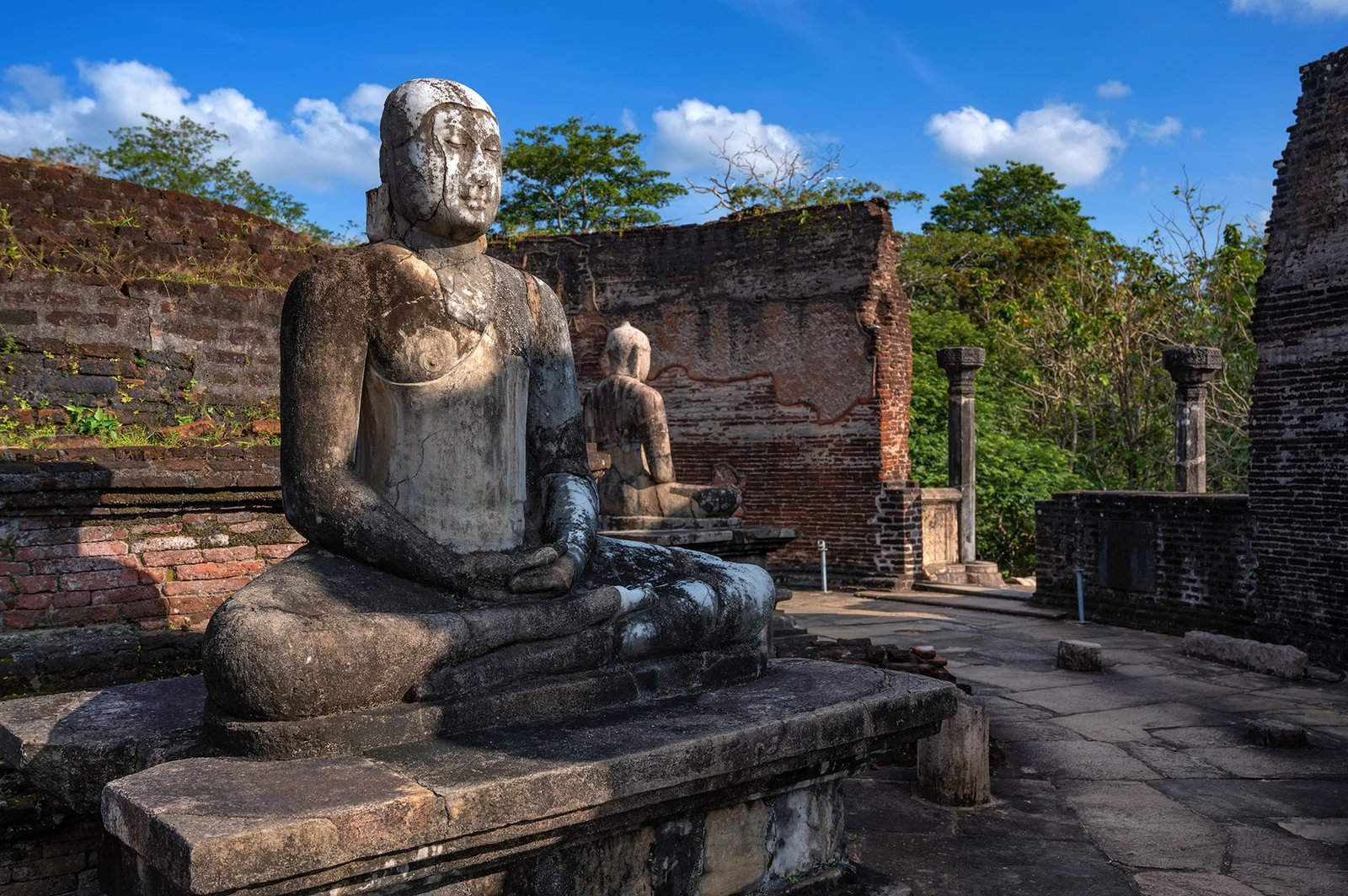
Things to Do in Polonnaruwa, Sri Lanka

Discover Most Visited Attractions

Shiva Devale No. 2

Royal Palace Complex

Lankatilaka Temple

Rankot Vehera

Parakrama Samudra

Polonnaruwa Vatadage

Gal Vihara

happy holiday

Tailer Made Tours

About

Polonnaruwa served as Sri Lanka’s capital from approximately 1070 to 1232 CE, following the decline of Anuradhapura. The city flourished particularly during the reign of King Parakramabahu I (1153-1186), who undertook massive building programs including the Parakrama Samudra reservoir, numerous temples, and administrative buildings. The city’s golden period lasted about 150 years before being abandoned due to invasion and malaria. The archaeological site covers a large area, roughly 4-5 kilometers north to south. The ruins are concentrated in several clusters: the royal citadel area with the palace and administrative buildings, the quadrangle containing several important temples, and the northern group with major stupas and monasteries. Visiting the complete site requires either cycling or driving between these sections. Unlike Anuradhapura, where active temples sit among the ruins, Polonnaruwa is a maintained archaeological park with no current religious activity except occasional visits by pilgrims. This status has helped preserve the site, though it makes Polonnaruwa feel more like a museum than a living city. The modern town of Polonnaruwa sits a few kilometers from the ancient ruins. The town provides services for visitors and functions as an administrative center for the district. Most hotels and guesthouses are located between the town and the archaeological site or around the shores of Parakrama Samudra. The area has a dry climate similar to much of Sri Lanka’s north-central region. Temperatures are typically hot, and the landscape is scrub and dry forest with some agricultural areas. The Parakrama Samudra and several other ancient tanks support intensive rice cultivation. Wildlife in the area includes monkeys, mongooses, and various bird species, with elephants occasionally passing through surrounding forests.

Planing Your Visit

The archaeological site is best explored early in the morning before temperatures climb. Most visitors spend 4-6 hours touring the main ruins. Bicycles can be rented near the entrance and work well for covering the spread-out site. Alternatively, three-wheelers and cars can be hired to drive between the main clusters of ruins.

Polonnaruwa works well as a day trip from Dambulla or Sigiriya, both about an hour away. Many travelers include it as part of a Cultural Triangle tour visiting Anuradhapura, Sigiriya, Dambulla, and Polonnaruwa over 2-3 days. The site can also be combined with a safari at Minneriya or Kaudulla National Park, both located nearby.

Leopard Ceylon can organize your Cultural Triangle tour with Polonnaruwa as one of the key stops. We arrange transport between the ancient cities, coordinate accommodation, and can set up bicycle rentals or guided tours at the archaeological site. Whether you’re focusing specifically on Sri Lanka’s ancient capitals or combining them with other destinations, we’ll handle the logistics. Contact us to discuss your itinerary through the Cultural Triangle and we’ll work out the details that fit your schedule and interests.

Book A Taxi

MM slash DD slash YYYY

Great For :

Holiday Tours

Cultural Tours

Beach Tour

City Tour

Book A Taxi

MM slash DD slash YYYY